


By God’s grace, I’ve been able to upload the second video in my series on the book of Revelation to YouTube. Here’s the link to the video.
As you may know, Revelation chapter 2 continues the account of what John the Beloved saw and heard while he was on the island of Patmos in the Aegean Sea near the end of the first century. In chapter 1, John tells us that Jesus Christ, the Son of God, appeared to him there in His resurrection body.
John says he fell at Jesus’ feet as though dead. But then Jesus touched him and told him to write what he saw in a book and send it to “the seven churches which are in Asia.”
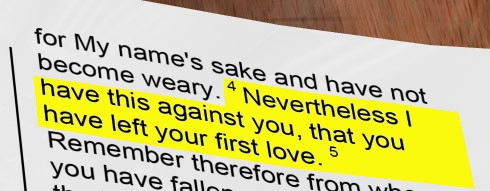 Like so much of Revelation, chapter 2 contains verses that are poignant, mysterious, or controversial. Among them are these stirring words from Jesus to the church in Ephesus, “Nevertheless I have this against you, that you have left your first love.” (Revelation 2:4) I spend some time in the video talking about this verse and what it means. It has been a special word to me ever since I first read it.
Some passages in Revelation can stir up strong disagreement even among devout Christians. One of the most sensitive questions is how to understand Jesus’ words about Jewish identity in His message to the church in 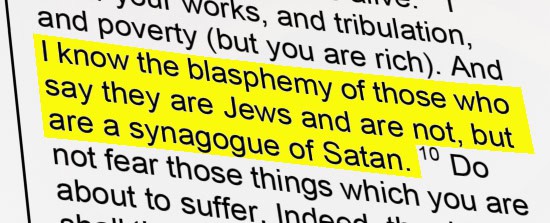 Smyrna. In Revelation 2:9, Jesus said, “I know the blasphemy of them which say they are Jews, and are not, but are the synagogue of Satan.” Verses like this can bring out passionate reactions. When it comes time to write the script for a video, I have to trust the Lord to give me the words to address passages like this.
I hope to film the next two videos in January after visiting my kids and grandkids in Scandinavia for Christmas and New Year. One video will cover Revelation chapter 3, and the other will cover chapters 4 and 5. Thanks so much for your prayers and encouragement.
Your friend in Him,
Mark
 I’m happy to say that the video on Revelation chapter 1 is now on YouTube.
 Then at the end of that dream there were these two men that I was telling all this to. And when I woke up from the dream, I immediately realized that two long-time friends of mine were dropping by for a visit that day.
 Does God ever send His wrath on His own people? Usually, I’d be the first to affirm that He does not. A well-known Bible verse tells us, “
 A strong comparison could be drawn to Lot, the nephew of the patriarch Abraham, some 4,000 years ago. Lot and his family were increasingly “
 But we don’t know much about the vastly larger number of people who were the mockers and scoffers, the hardened people who were called by His name but perished in the flood of judgments that the Lord had been warning them about for decades. And the thought has come to my mind: Will there be multitudes of believers in the coming judgments of God upon this earth, described in Revelation, who will be in such a state of lukewarmness, complacency and indifference that they simply will not obey when the Lord says, “Come out of her, My people”?